
“Ry Cooder: A Lifetime of Digging for Musical Treasures”
 Rico Ferrara
 Originally Posted on by Blues For a Big Town blog
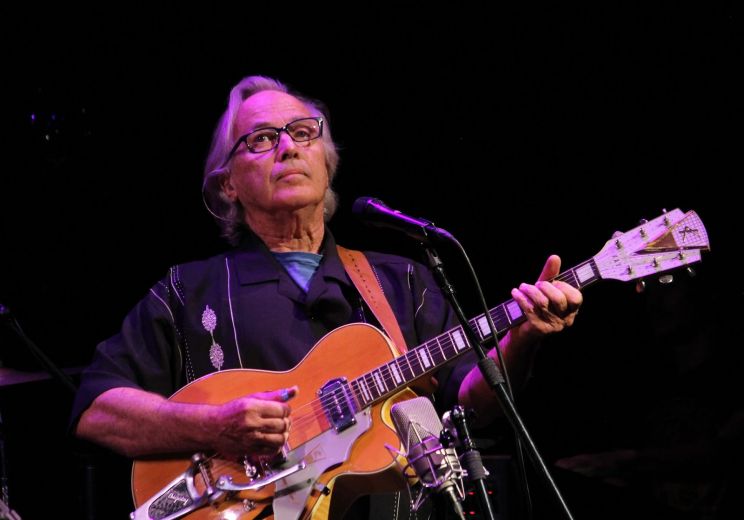
“You go through these phases. That’s how life is. Over the long term, you can’t just do one thing. I saw that back in the Sixties when I was getting started” – Ry Cooder
“Music is a treasure hunt. You dig and dig and sometimes you find something” – Ry Cooder
The above quotes essentially sum up Ry Cooder’s long, illustrious, and multi faceted career; be it a solo artist, soundtrack creator, sideman, or session musician.
It’s been a calling where, as a young virtuoso guitar player, he first distinguished himself in the world of Blues. And now, in addition to Blues, he continues to explore and embrace other realms of the music spectrum. In doing so, over the course of a 50+ year career, Cooder has fashioned his own musical category. He has done so through his curiosity and passionate examination of Roots music with touch points of Country, Gospel, Blues, Jazz, R&B, Tex-Mex, and Hawaiian music.
The 78 year old, Los Angeles born, Ry Cooder started on his musical journey early in life. That is, after being introduced to the guitar at the age of 3, he became quite adept on the instrument by 8 years of age.
Further, Ry, a constant presence om the L.A. Blues scene, was a known commodity by the time he was 17. At 18 Ry formed The Rising Sons with Taj Mahal. The short lived band, (active for approximately one year), served to launch the careers of both Mahal and Cooder. For his part, Ry contributed vocals, six and 12 string guitar, mandolin, slide and bottleneck guitar, and dobro, In their short time the band managed to record one album for Columbia Records, (that the label chose to keep on the shelf till much later when they thought they could maximize sales by capitalizing on the name recognition of the now more established Taj and Ry).
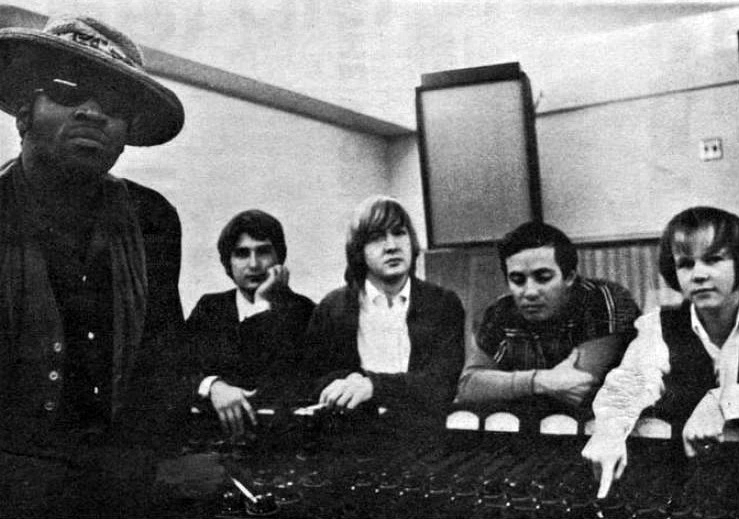
(Incidentally, Ry and Taj reunited in the studio for the first time in 50 years for the 2022 release of Get On Board: The Songs Of Sonny Terry and Brownie McGhee).
After a short stint with Captain Beefheart’s Magic Band, Cooder established himself as a session musician.
As such, he contributed to albums of a wide range of artists – including high profile musicians like The Rolling Stones, Randy Newman, and Little Feat – displaying a versatility that belied his young age. In all instances, Cooder didn’t attempt to dominate the sessions but rather chose a more complementary role. His guitar playing reflecting his developing core values of tone, texture, and deep feeling that continue to present day.
Finding his own voice, Cooder released his first album, the self titled Ry Cooder in 1970.
Well received by critics for its diversity, the inaugural release stands as a starting point to a recording career that has produced, all projects combined, more than 35 albums to date. (An historical perspective: Ry Cooder and its follow-up Into The Purple Valley reside on the same plane as The Band’s first two albums. Both artists eschewed the musical fashions of the day while providing truly unique American music)
There’s high quality work apparent in all of Cooder’s musical offerings. However, although viewed positively by the cognoscenti, (and supported with personal appearances), Ry has never attained much more than a cult status.
Choosing primarily to record and put his own personal stamp on, (sometimes obscure), covers, sales on his most popular records are relatively modest, (as noted):
Bop Till You Drop (1979) 140,000 units
Borderline (1980) 100,000 units
Into The Purple Valley (1972) 60,000 units
Paradise And Lunch (1974) 60,000 units
Why Don’t You Try Me Tonight: The Best Of Ry Cooder (1986) 60,000 units
Get Rhythm (1987) 60,000 units
And only a select few made the charts:
Paradise And Lunch (1974)
Chicken Skin Music (1976)
Jazz (1978)
Bop Till You Drop (1979)
Borderline (1980)
Prodigal Son (2018)
It wasn’t until 5 outside musical projects garnered Grammy Awards that Ry truly found international acclaim:
Meeting By The River (1993) with Vishwa Mohan Bhatt; “World Music Album”
Talking Timbuktu (1994) with Ali Farke Toure; “World Music Album”
Buena Vista Social Club (1997) with various guests; “Tropical Latin Performance”
Mambo Sinuendo (2003) with Manuel Galban; “Pop Instrumental Album”
Buenos Hermanos (2003) with Ibrahim Ferrer of Buena Vista Social Club; “Traditional Tropical Latin Album”
All of the above are representative of Cooder’s objective of discovering artists all over the world, and, in turn, bringing them to the attention of a world wide audience. The highest profile of these initiatives is undoubtedly Buena Vista Social Club that sold over 8 million copies, in addition to spawning a critically acclaimed documentary of the same name.
**As a side note, Buena Vista Social Club is typical of Ry’s approach when dealing with these various prospective outside projects. Namely, rather than exploiting the situation at hand for his own gain or taking over the venture, (thereby risking losing the essential properties of the initiative), Cooder seeks to understand the nuances of the subject matter. In doing so, Ry contributes co-operatively to enhance and feature the artists involved.**
In the case of Buena Vista Social Club, Ry wanted to revisit Cuba’s vibrant Jazz scene before Castro took over the country.
Cooder succeeded by recruiting some of the stars of that era to recreate the setting. Included are legendary figures such as: Compay Segundo (vocals, tres); Ibrahim Ferrer (vocals); Ruben Gonzalez (piano); Omar Portuondo (vocals). Some of these aging stars also benefitted from a renewed interest that led to international tours in addition to performance guest spots on various TV programs.
Although overshadowed as they might appear to be by the outside projects, Ry Cooder’s virtuosity, overall talent, and artistry on his solo efforts are not diminished.
Indeed, there are worthwhile moments to be found on every release, (as the accompanying playlist attests). Accordingly, it can be said with some certainty that if 10 of Cooder’s fans were asked to name their favourite Ry albums, there would be quite a wide sampling of responses.
Additionally, I would venture to guess that the same fans would be segmented into two distinct camps: those that were there at the outset, treasuring albums like Ry Cooder, Into The Purple Valley, and Boomer’s Story coupled with later fans that climbed aboard the Cooder train once Ry enjoyed more notoriety.
Speaking personally, while I knew of Ry’s exploits early on, and I caught him live in the summer of ’72 at Yorkville’s historic Riverboat in Toronto; I’d place myself in the second category. I rationalize my position by stating that by the time I “saw the light”, Ry’s musical intuition was more fully developed / realized.
In saying that, my 3 favourite albums of his later period are, (in order of preference): Paradise And Lunch, Bop Till You Drop, and Borderline.

All offer outstanding musicianship and a stellar supporting cast on sets of inspired covers and original works. They all feature a compelling mix of traditional songs, and samplings of Blues, Gospel, and Pop. And providing a warm soothing glow on all three records are supporting Gospel choral arrangements as the situation warrants. Those Gospel choruses are typically helmed by Bobby King and Terry Evans – stars in their own right.
Among the many highlights on “Paradise” (which I deem as Ry’s masterpiece), are reworked versions of old time Blues like “Tattler” and “Married Man’s A Fool”; and a guitar / piano duet with Jazz great Earl “Fatha” Hines on “Ditty Wah Dttdy”. (“I wish somebody would tell me what ‘Ditty Wah Ditty’ means”).
Bop Till You Drop, (reportedly, the very first digital recording), stays firmly in an R&B groove. It includes a stunning remake of the Pomus and Shulman / Elvis number “Little Sister”, a cover of Bobby McClure and Fontella Bass’ 1965 hit “Don’t Mess Up A Good Thing” featuring Chaka Khan, and – the piece de resistance – the beautiful Gospel Soul track “I Can’t Win” – with Bobby King on lead vocals – closing out the album.
Borderline, the follow-up to Bop, stays in the realm of R&B like it’s predecessor. Of note are selections “Crazy ‘Bout An Automobile”, “Why Don’t You Try Me”, and a cover of Wilson Pickett’s “634-5789” that will get your shoulders shaking.


 Joe Ruicci


 Steve Obrien