Nick Gravenites: The Untold Story of a Powerful Blues Pioneer

Originally Posted on by bluesforabigtown
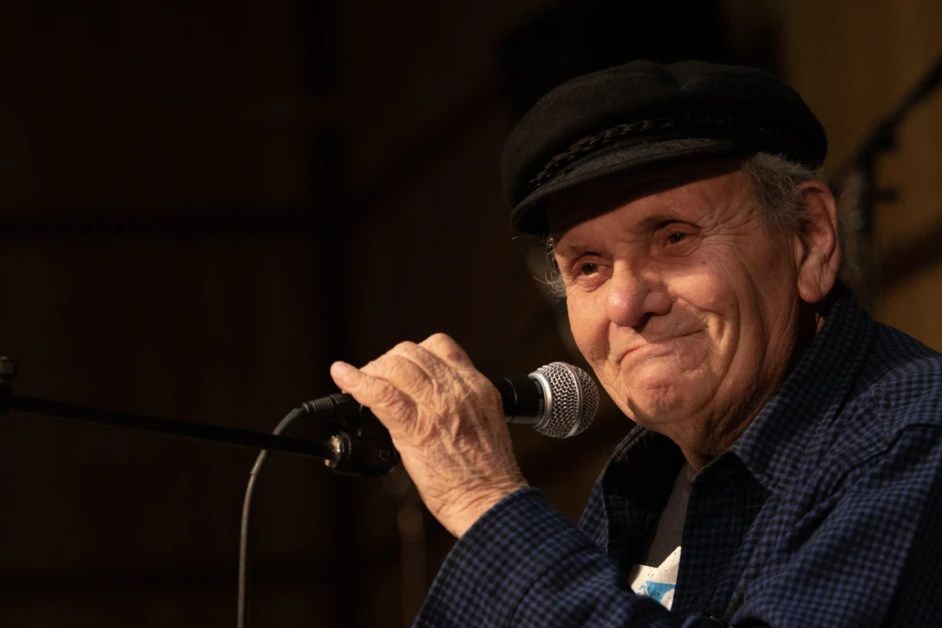
Those music listeners who are familiar with the Chicago Blues scene of the 1960’s; and more specifically the evolution and growth of the white Blues scene, will know of the contributions of Nick Gravenites to that musical landscape.
Additionally – in broader terms – Nick Gravenites also served as the link between Chicago’s 50’s’and 60’s Folk and Blues scenes and the Bay area Blues and psychedelic scene. That is, Gravenites took his midwestern musical sensibilities westward for the first time in 1959, and in time proved to be a vital cog in the establishment of the local scene. Nick would go back and forth between Chicago and the Bay area several times before settling on the West coast in the late 60’s. In San Francisco, he joined forces with many local musicians including John Cipolina of The Quicksilver Messenger Service and Big Brother & The Holding Company. Of note was Gravenities’ work with, and advocacy, of Janis Joplin. (For example, Nick was there offering guidance and support when Janis decided to part ways with Big Brother, and go out on her own.)
Known affectionately as “Nick The Greek”, Gravenites – proper pronunciation “Grav-a-nee-tees” – was the product of Chicago’s mean streets. While seemingly constantly fighting personal demons, Nick prided himself in fostering a tough guy persona. In his own words: “I was a pistol-packin’ tough guy and I had a reputation”.
That reputation served as self preservation and a right of passage for Gravenites, who grew up in the Brighton Park area of Chicago’s Southside. Brighton Park was bordered by a Black ghetto on three sides, and Lake Michigan on the other side. Gravenites described the neighbourhood, (comprised of a mix of Greek, Hungarian, German, Irish, and Polish immigrants), as a ‘white ghetto”. And, in accordance with ghetto realities, sustainable work and income were hard to come by. In contrast, with prevalent big city crime viewed as a lucrative lifestyle, criminals, (while feared), were held in high regard by the local populace.
The Gravenites family had an established candy business that Nick’s father started by making chocolates in the basement of their “Candy Land” store front. For his part, Nick, began working in the business in 1951, at the age of 13, after his father passed away.
When he wasn’t working, he would hang out on street corners with local gangs getting into mischief. So much so that young Nick was sent away to a military school in hopes of changing his nonconformist ways. But, to his mother’s dismay, Gravenites was expelled for fighting, and soon back to his streetwise lifestyle.
Along the way, Nick, who considered himself hip, started taking in the local music scene offered by the nearby Black Blues clubs and the Folklore Society at the University of Chicago. Absorbing elements of both genres, Nick was soon proving himself to be a competent guitar player as well as a talented singer and songwriter.
At the University of Chicago – where Nick was enrolled but didn’t graduate – he met a fellow student, one Paul Butterfield, at a hootenanny.
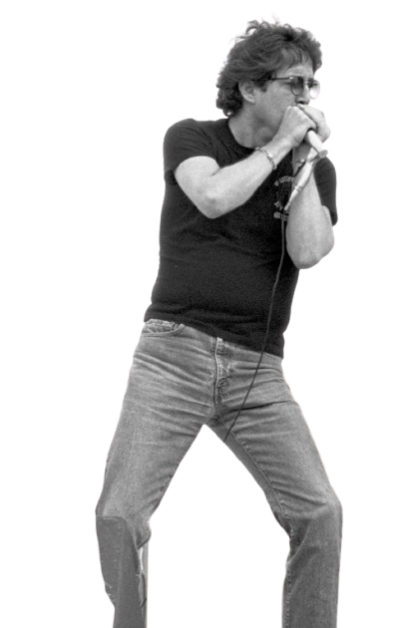
It wasn’t long before they joined forces as Nick & Paul – with Nick on guitar and primary vocals and guitar and Butter on harp and vocals. Performing a mix of covers and original tunes, the duo established themselves playing various university campuses.
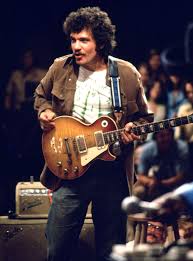
The friendship and working relationship with Butterfield – or “Bunky” as he was known to friends in those days – would last until Butterfield’s untimely death in 1987. Similarly, his relationship with guitarist Michael Bloomfield, who Nick initially met in a Folk music shop, would endure until Bloomers passed away in 1981. Bloomfield, whose expertise on guitar, and encyclopedic knowledge of a variety of musical styles in addition to Blues, was considered in the top echelon of guitar players from the earliest stage of his career. Nick and Michael’s paths would cross a number of times in their respective musical endeavours.
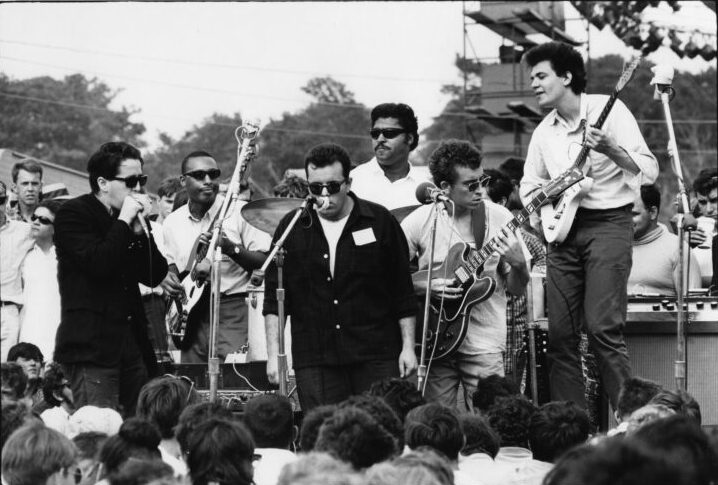
It’s debatable as to who initiated the practice of frequenting the Southside clubs, but it’s well known that Gravenites, Butterfield, and Bloomfield were regulars.
And, it’s well noted that, at the time, they were usually the only white faces in establishments such as Pepper’s Lounge, The Checkerboard, and Theresa’s Lounge, among numerous others. There they looked up to, and learned the Blues first hand from the masters like Muddy Waters, Howlin’ Wolf, Little Walter etc. Indeed, they earned musical respect to the extent that they were often invited to sit in with their heroes.
In their own sphere, it was Bloomfield who urged Gravenites to join him and harp ace Charlie Musselwhite in their first bonafede Blues band. Gravenites recalls his time in the band as a great experience as well as stepping off point. Nick said that “I got to do more than Chicago Blues. I got to develop and perform a lot of originals – my own stuff, my own Blues.”
One of those original songs is the semi autobiographical “Born In Chicago”, “… well my father told me, son you had better get a gun.” The Paul Butterfield Blues Band would go on to release the song as the opening track of their ground breaking self titled first album, providing “Born In Chicago” iconic status not only in the annals of the emerging young (white) Blues movement but Blues in general to present day
Another Gravenites song – “It’s About Time” – would serve as the stimulus for the genre bending title cut and centerpiece of the Butterfield Band’s second album, East-West. The song is cited by many as the first extended “psychedelic” jam that set the trend of lengthy solos that were the calling card of West Coast bands like The Grateful Dead.
In the course of his career Gravenites would prove instrumental in a number of musical projects.
He made his presence felt as either inspiration, songwriting, performing, or producing over 40 albums. Gravenites was the most prolific in the 60’s and 70’s. He added vocals and wrote songs for Michael Bloomfield’s historic band, The Electric Flag, that enjoyed top billing at Monterey Pop; and was in heavy FM rotation with their album A Long Time Comin’. (A somewhat interesting side note – given that Nick was always Bloomfield’s first call – is that Gravenites was only offered the lead vocal chair after Mitch Ryder (??) turned down the offer).
After The Flag disbanded, Nick sang on and produced Bloomfield’s first solo album It’s Not Killing Me.
The album would be the start of a number of Bloomfield / Gravenites collaborations going forward. Bloomfield played guitar on Nick’s first solo album My Labours that featured a number of Nick’s signature tunes including “Gypsy Good Time”, “Killing My Love”, “Holy Moly”, “Moon Tune”, and the previously mentioned “It’s About Time”.
Another notable alliance was the soundtrack for the 1973 film Steelyard Blues. Nick was commissioned to provide a score that featured selections covering a wide range of styles – from Bessie Smith through Tampa Red through Fats Waller. Calling on Bloomfield’s expertise, Nick and Michael responded with 14 original numbers that feature Butterfield and Maria Muldaur among others. It’s an outstanding collection of songs that would stand on its own merit as a legitimate “Gravenites, Bloomfield & Friends” release.
Gravenites also found the time to produce 2 Otis Rush albums: the classic Right Place, Wrong Time and Mourning In The Morning cut at FAME recording studio in Muscle Shoals, and featuring Duane Allman. And, in a display of Nick’s wide ranging interests and influence, he produced Brewer & Shipley’s album Tarkio Road that contained the Top 40 hit, “One Toke Over The Line”.
Gravenites also wrote songs for a variety of other artists including Janis Joplin’s “Work Me Lord” and “Buried Alive In The Blues”, (recorded as an instrumental on her last album Pearl because Janis died of an overdose before she could add the vocals). (In an aligned footnote, Nick fronted Janis’ old band Big Brother & The Holding Company from 1969 to 1972, providing the haunting “Heartache People” on the Be A Brother album)