10 Powerful AI Music Tools That Transform Your Career Today
 Joe Ruicci
Artificial intelligence is fundamentally reshaping the music industry. From bedroom producers to major record labels, everyone faces unprecedented changes in how music gets created, distributed, and monetized.
Quick Stats:
• 100,000+ tracks uploaded daily using AI tools
• 80% cost reduction in professional music production
• $500M invested in music AI startups since 2023
• 35% average income decline for session musicians
This comprehensive guide examines AI’s multifaceted impact on today’s musicians. Whether you’re an independent artist, professional producer, or industry executive, understanding these shifts is crucial for your future success.
How AI Makes Music Production Accessible to Everyone
Today’s independent musicians enjoy unprecedented access to professional-quality production tools. Thanks to AI-powered software, creating radio-ready tracks no longer requires expensive studio time or specialized engineering knowledge.
Essential AI Tools for Independent Artists
Several platforms have transformed bedroom production into a viable career path. LANDR, for instance, provides automated mastering that processes tracks in minutes. Previously, this service would cost hundreds per song and require booking specialized engineers.
Similarly, Splice uses machine learning to recommend samples that match your unique style. With over 40 million samples in its library, the platform learns from your choices and suggests complementary sounds. As a result, producers can work faster while maintaining creative consistency.
Meanwhile, iZotope Neutron offers intelligent mixing assistance. The software analyzes your tracks and suggests EQ, compression, and spatial placement adjustments. Consequently, even novice producers achieve professional-sounding mixes without years of technical training.
The Double-Edged Sword of Easy Access
However, democratization brings its own challenges. Streaming platforms now receive over 100,000 new tracks daily. This massive influx creates fierce competition for listener attention. Moreover, standing out in an AI-saturated marketplace requires more than just technical skill.
Furthermore, musicians must now master algorithmic optimization alongside their craft. Understanding streaming platform algorithms, social media engagement, and SEO becomes just as important as musical talent. In other words, today’s independent artist needs to be part musician, part marketer, and part data analyst.
AI as Creative Partner for Professional Musicians
Professional musicians increasingly embrace AI as a collaborative tool rather than a threat. Grammy-winning producers now regularly use machine learning to enhance their creative process and break through mental blocks.
How Professionals Integrate AI Into Workflows
AIVA and Amper Music generate musical ideas that serve as creative springboards. Instead of replacing human creativity, these tools help artists explore new harmonic territories. For example, a composer might use AI-generated chord progressions as inspiration, then add their unique emotional interpretation.
Additionally, vocal processing technology has evolved dramatically. Melodyne now offers AI-driven pitch correction that adapts to each singer’s natural style. Rather than creating robotic perfection, the software subtly enhances performance while preserving authentic character.
Where to Draw the Line on AI Assistance
Nevertheless, questions about authenticity persist. When does helpful enhancement become creative replacement? This debate intensifies as AI capabilities grow more sophisticated. Ultimately, the industry struggles to define where tool assistance ends and artificial creation begins.
Corporate Control: Tech Giants and Record Labels
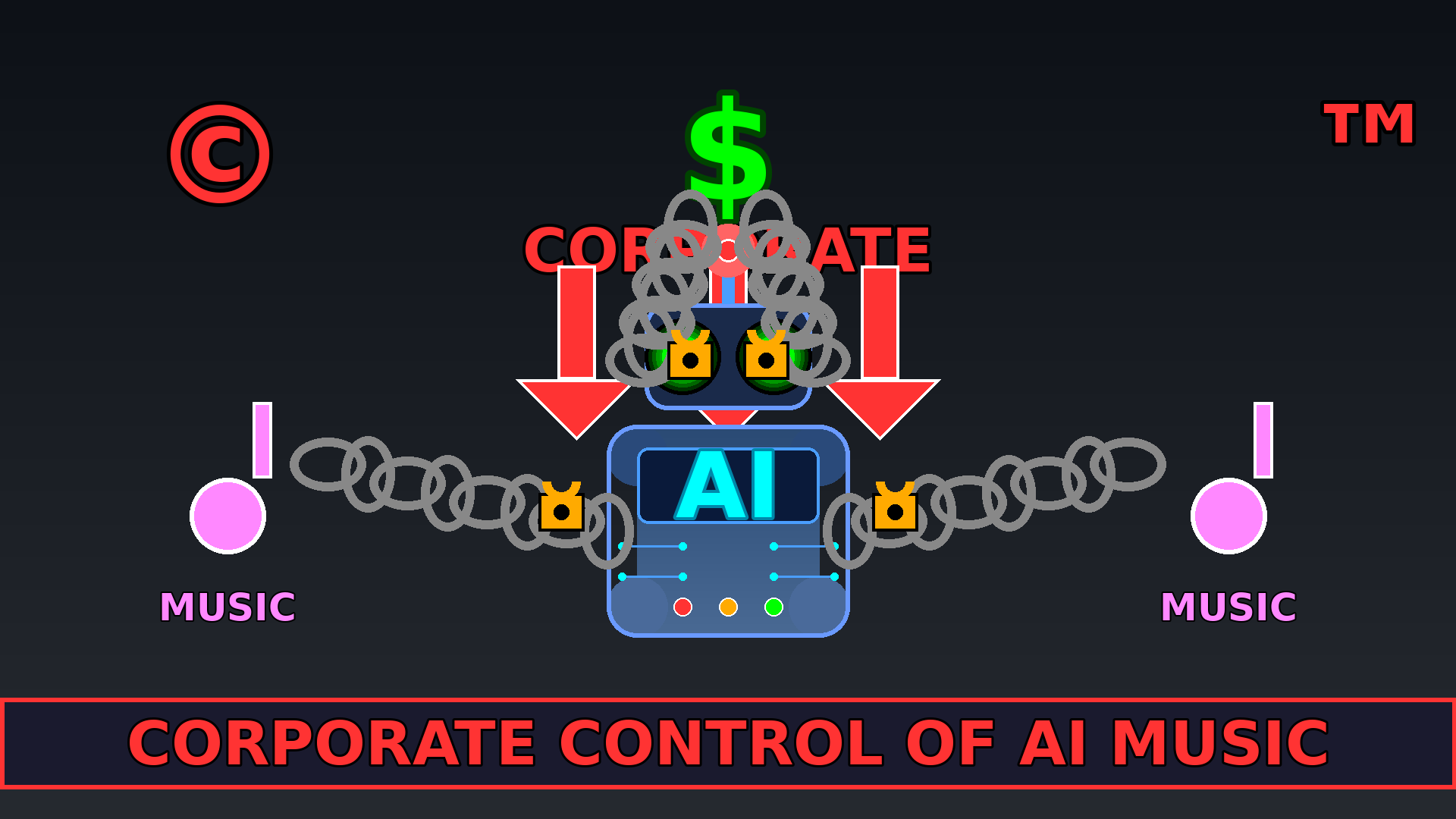
Major corporations shape AI’s role in music through massive investments and strategic decisions. Their choices determine which technologies succeed and how musicians adapt to industry changes.
Silicon Valley’s Music AI Development
Google leads with its Magenta project, exploring machine learning for artistic creation. Similarly, Meta developed MusicGen for text-to-audio generation. Both companies invest billions in music AI research.
Meanwhile, OpenAI’s Jukebox demonstrates raw audio generation in any style. These corporate initiatives concentrate power among tech giants rather than traditional music industry players. Consequently, Silicon Valley increasingly controls music creation tools and distribution channels.
Record Labels Navigate AI Disruption
Universal Music Group, Sony Music Entertainment, and Warner Music Group pursue contradictory strategies. On one hand, they’ve invested over $500 million in AI startups since 2023. On the other hand, they aggressively fight unauthorized AI training on their catalogs.
Furthermore, labels use AI for talent discovery and playlist optimization. Their algorithms analyze streaming data to identify emerging artists worth signing. However, this data-driven approach may overlook unconventional talent that doesn’t fit algorithmic patterns.
Streaming Platforms Wield Algorithmic Power
Spotify, Apple Music, and YouTube Music deploy sophisticated recommendation systems affecting billions of listeners. These algorithms determine which artists gain exposure and, consequently, which musicians sustain careers. Therefore, understanding platform algorithms becomes essential for artist success, fundamentally changing how music careers develop.
Copyright Battles and Legal Uncertainty
AI music copyright represents the industry’s most contentious legal challenge. Current laws weren’t designed for machine learning, creating uncertainty about ownership, fair use, and artist compensation.
Who Owns AI-Generated Music?
Courts worldwide grapple with fundamental questions. Does AI-generated music deserve copyright protection? Who owns compositions created using AI trained on existing works? Currently, legal systems provide few clear answers.
Moreover, the fair use debate intensifies. Technology companies argue that training AI models constitutes transformative fair use. Conversely, artists contend that unauthorized training violates their copyright. Over 50 active lawsuits currently address these questions globally.
Artist Responses Vary Dramatically
Some musicians embrace AI collaboration. For instance, artist Grimes offers her voice for AI training with royalty splits. In contrast, others like Nick Cave vehemently oppose any AI use of their work. These divergent approaches highlight the industry’s ongoing struggle to establish ethical standards.
Economic Impact Across Different Career Levels
AI affects musicians differently depending on their career stage and income sources. Understanding these varied impacts helps artists navigate the changing landscape strategically.
Emerging Artists: Lower Costs, Fiercer Competition
Independent musicians benefit from 80% cost reductions in production expenses. However, they simultaneously face unprecedented competition from millions of other AI-empowered creators. Consequently, technical accessibility doesn’t guarantee financial viability.
Additionally, emerging artists must develop new skill sets. Beyond musical talent, success requires algorithmic literacy, social media expertise, and data analysis capabilities. In essence, modern independent musicians operate as small businesses requiring diverse competencies.
Mid-Level Professionals Face Greatest Threat
Session musicians and media composers experience the most severe economic pressure. Survey data shows 35% average income decline since 2022. Furthermore, commercial music opportunities decreased by 50% as AI alternatives became available.
For example, corporate video composers once earned steady income creating custom soundtracks. Now they compete against AI platforms generating similar music in minutes for 90% less cost. Similarly, session players lose work to AI-generated instrumental tracks.
Established Artists Leverage AI Successfully
Conversely, superstar musicians with established audiences often benefit from AI tools. They use technology to enhance productivity, experiment with new sounds, and create personalized fan content. Moreover, their existing brand recognition provides protection against algorithmic volatility that undermines emerging artists.
Does AI Music Have Cultural Value?
Beyond economics and copyright, AI challenges fundamental assumptions about music’s purpose and meaning. These philosophical questions affect how society values both human and machine-created art.
The Human Connection Question
Historically, music served as distinctly human expression—communicating emotions and experiences beyond ordinary language. However, when algorithms generate music optimized for streaming metrics rather than human emotion, does it retain the same cultural significance?
Interestingly, neuroscience research reveals that listeners respond differently to human versus machine-created music. Knowing an artist lived through expressed emotions affects psychological and emotional engagement. Therefore, the creator’s humanity appears integral to music’s deepest impact.
Live Performance Remains Irreplaceable
Meanwhile, concert attendance grows despite streaming dominance. This trend suggests audiences still value real-time human performance and communal experiences that AI cannot replicate. Consequently, live music may represent a domain where human artistry maintains primacy even as recorded music becomes increasingly automated.
Government Regulation and Industry Standards
Policymakers worldwide develop frameworks to regulate AI music while balancing innovation and artist protection. These emerging regulations will profoundly shape the industry’s future.
International Regulatory Approaches
The European Union proposes requiring disclosure when content is AI-generated. Similarly, the United States Congress holds hearings on AI copyright and fair compensation. Meanwhile, the United Kingdom considers expanding copyright protections for voice and likeness rights.
However, regulatory approaches vary significantly across jurisdictions. Japan, for instance, prioritizes technological innovation while seeking to protect creators. These different philosophies create a complex global landscape for international music distribution.
Proposed Licensing Frameworks
Industry organizations propose several compensation models. First, training licensing would require AI companies to license music for dataset training. Second, output royalties would compensate artists whose work influenced AI-generated music. Third, opt-out systems would let artists control whether their music trains AI models.
Nevertheless, technology companies resist these approaches, arguing they stifle innovation. They maintain that AI training constitutes transformative fair use under current copyright doctrine. This fundamental disagreement ensures continued legal battles for years to come.
Practical Strategies for Musicians in 2026
Given these industry changes, musicians need concrete strategies for career sustainability. The following approaches help artists thrive amid AI disruption.
For Independent Artists
First, embrace AI tools while maintaining authentic human connection. Use technology to enhance productivity, but ensure your artistic voice remains central. Additionally, focus on building direct fan relationships rather than depending solely on algorithmic discovery.
Second, develop multiple income streams. Combine streaming revenue with live performances, merchandise, licensing, and direct fan support through platforms like Patreon. Diversification provides stability when any single income source faces disruption.
For Professional Musicians
Mid-level professionals should identify services AI cannot easily replicate. Personal collaboration, creative problem-solving, and nuanced interpretation remain valuable. Moreover, building strong professional networks and reputation provides protection against algorithmic competition.
Furthermore, consider specializing in areas where human expertise adds unique value. Teaching, artist development, and high-end production work often resist automation. Consequently, investing in these skills offers better long-term career prospects.
The Road Ahead: Shaping AI’s Future in Music
AI in music represents neither purely positive innovation nor existential threat. Instead, it presents complex challenges requiring thoughtful responses from all stakeholders. Independent artists gain affordable tools while fighting for visibility. Session musicians lose traditional work while seeking new opportunities. Major labels pursue contradictory strategies serving neither their interests nor artists’ needs.
Moreover, fundamental questions remain unresolved. Will AI democratize creativity or concentrate power among platform owners? Can working musicians sustain careers in an AI-dominated industry? How will copyright law evolve to protect artists’ rights? These questions lack clear answers, making the coming years crucial for music’s future.
Nevertheless, one thing seems certain: the choices being made now will determine music’s trajectory for decades. Legislators crafting regulations, companies developing technology, platforms curating content, and musicians themselves all actively shape this future. Therefore, engaged participation in these decisions becomes essential for anyone caring about music’s cultural role.
Ultimately, whether AI becomes a tool that empowers musicians or a system that optimizes away music’s human qualities depends on who controls its development. The AI music revolution continues unfolding, and those who care about music as art, culture, and livelihood must help determine its direction. Your voice matters in shaping what comes next.
Joe Ruicci
(research, and images created by assistant Claude.ai)

 Rico Ferrara


 Steve Obrien